Innovative Science Education
Partnerships
At the Teacher Scientist Network, we believe that the heart of effective science education lies in the authentic connections fostered between teachers and scientists. This unique collaboration not only invigorates classroom learning but also transforms the educational landscape by providing students with direct access to scientific insights and real-world applications.
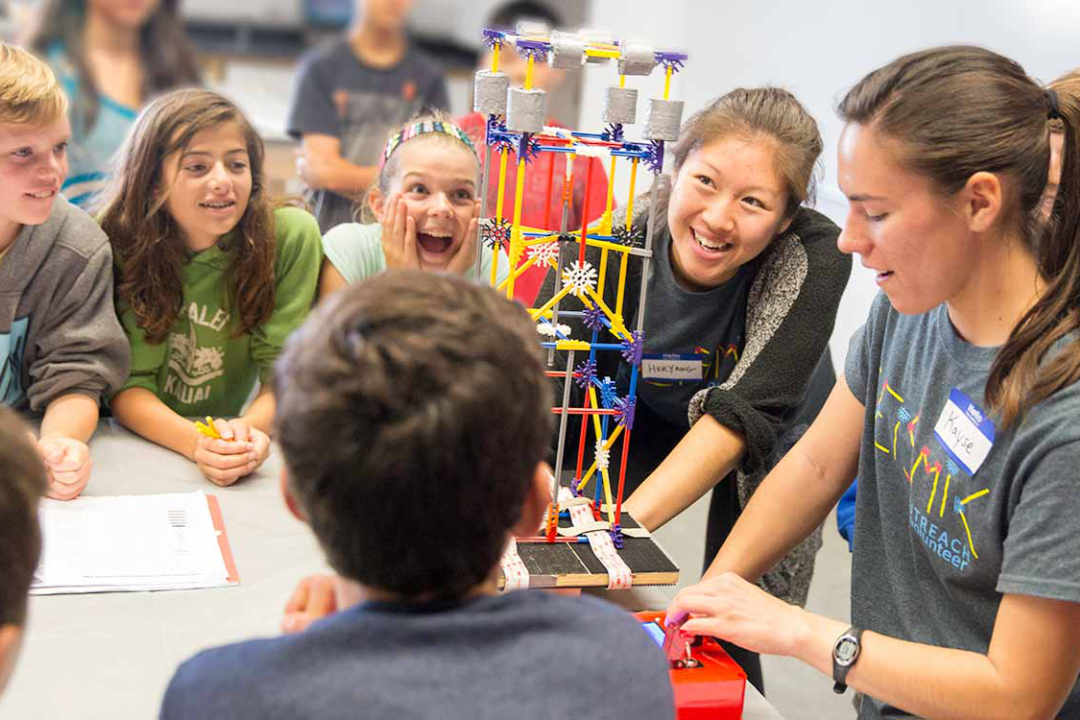
From the start (1994) of the Teacher Scientist Network (TSN), as our name suggests, pioneered the partnering of teachers and scientists in 1:1 long-term, sustainable partnerships. We still strongly endorse this approach to boosting teacher confidence, helping teachers design reliable investigations, carry out solid scientific enquiries and enable the delivery of up-to-date and relevant science in our classrooms. At the same time your students (young or old) meet and get to know a “real scientist”
We will support any teacher or scientist wishing to establish such a partnership: do get in touch.
Our coordinator was fortunate in having 2 such partnerships, one in primary, the other in secondary and these have under-pinned his passion for TSN.
There is still a need for scientists to be visible in our communities and communicating widely to tackle negative stereotypes and under-representation. Ultimately ‘if you can’t see or hear it’, you won’t want to be it!
We promote and support other programmes offering these connections as well, whether online (I’m a scientist get me out of here) or face-to-face (eg. STEM Ambassadors) as well as recognising the value of events such as Soapbox Science where you can meet scientists in some unusual locations around the UK & beyond.
Case studies of TSN activity appeared in the book Science Communication: a practical guide for scientists (eds. Yeoman & Bowater) which is still widely available. Here we summarise some key advice and rationale based on our model of best practice.
Where do TSN partners meet, and how often?
Most partners meet at school, with the scientist engaging in classroom activities with the pupils. This seems to be very rewarding and productive for everyone. The frequency of these contacts ranges from many visits a term for some partners to just one or two times a year for others. We do not set a minimum or maximum level of commitment. Beyond the Induction meeting, each partnership self-manages itself, making its own arrangements - whatever suits; whatever is needed.
What do they meet for?
Many teachers encourage classroom visits from the scientist so that their children and the scientist get to know one another; children can talk to a 'real' scientist and get to know him or her as an ordinary person. Carrying out a ‘'draw a scientist activity' ahead of such a visit can make a great starting point.
The scientist may help the teacher or the children develop new investigations and other activities, perhaps by suggesting different contexts or procedures. Occasionally the scientist may make a more direct contribution by illustrating his or her work. As well as offering advice and expertise, some scientists are able to help with resources and materials for a particular section of school science work.